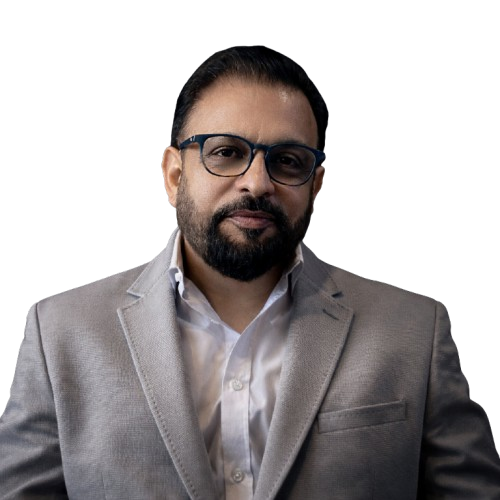
The Thinker
Every venture begins as an idea. Every system begins as a question. Before something is built in the physical world, it first exists in the landscape of thought. This path explores the ideas, frameworks, and questions that shape how I see the world and the future that humanity may be moving toward.
Thinking as Exploration
Thinking is often treated as an abstract activity—something separate from action.
In reality, thinking is a form of exploration.
A way of mapping possibilities before they exist.
Ideas function like hypotheses in science. They are attempts to explain patterns and anticipate outcomes. Some prove useful. Others fail under closer examination. What matters is the willingness to continually refine them as new information emerges.
The most interesting ideas are rarely comfortable.
They challenge assumptions that people take for granted.
But it is precisely these uncomfortable ideas that often lead to progress.
The Mismatch Between Systems and Reality
One recurring observation shapes much of my thinking.
The systems that govern human civilization often lag far behind the realities of the world they attempt to manage.
Many of our political and economic institutions were designed in eras when communication was slow, knowledge was limited, and the scale of human society was far smaller than it is today.
Today we live on a planet connected by instantaneous communication, global trade networks, and rapidly advancing technology.
Yet many of the structures guiding civilization still operate according to assumptions that belong to a different era.
This mismatch creates tension.
It produces inefficiencies, conflicts, and decisions that fail to reflect the complexity of the modern world.
Understanding how these systems might evolve is one of the central questions of our time.
Technology as a Force of Transformation
Technological change has always reshaped civilization.
- Agriculture transformed early human societies.
- Industrialization reorganized economies and cities.
- Digital networks connected the planet in ways that were previously unimaginable.
Artificial intelligence may represent the next major shift.
For the first time, we are developing systems capable of augmenting human cognition itself. Instead of machines that only amplify physical labor, we are beginning to build machines that assist thinking, analysis, and decision-making.
This development has profound implications.
It may allow humanity to solve problems that previously seemed intractable: large-scale coordination, resource distribution, complex scientific discovery.
But it also introduces new risks.
Technology expands power. Power always requires wisdom to guide it.
The question is not whether these technologies will transform society.
The question is how they will be used.
Abundance and the End of Artificial Scarcity
For most of human history, scarcity defined civilization.
- Food was limited.
- Energy was limited.
- Knowledge moved slowly.
Many social structures were built around managing these constraints.
But several emerging technologies—automation, advanced manufacturing, artificial intelligence, and new energy systems—suggest that certain forms of scarcity may begin to disappear.
If abundance becomes technologically achievable in areas such as energy, food production, and information access, many of the assumptions underlying current economic and political systems will require reconsideration.
The challenge will not simply be producing abundance.
It will be designing systems capable of distributing and managing it responsibly.
The Evolution of Collective Intelligence
Human intelligence has always been collective.
Science advances because knowledge accumulates across generations. Markets function because millions of individuals make decentralized decisions that produce emergent patterns.
Artificial intelligence introduces a new dimension to this process.
Human intelligence and machine intelligence together may create a form of augmented collective cognition—a system in which knowledge is generated, tested, and distributed far more rapidly than in the past.
If guided responsibly, this development could dramatically accelerate human progress.
It may allow civilization to address challenges that previously appeared unsolvable.
But it will also require new frameworks for governance, cooperation, and ethical decision-making.
Questioning Inherited Structures
Every generation inherits systems from the past.
Some of those systems remain useful.
Others persist simply because they have existed for a long time.
Thinking clearly about the future requires the willingness to examine these inherited structures without assuming they must remain unchanged.
Nations, economic systems, and institutions have all evolved repeatedly throughout history. There is no reason to believe the present forms represent the final stage of their development.
Civilization is an ongoing experiment.
The structures we live within today will almost certainly evolve into something different over the coming centuries.
Thinking Toward the Long Future
Most political and economic discussions focus on short time horizons—years or decades.
But some of the most important questions unfold across much longer periods.
- What might human civilization look like a hundred years from now?
- How will intelligence—both biological and artificial—continue to evolve?
- How might humanity organize itself on a planetary scale?
- And eventually, if our species survives and matures, how might we explore and inhabit environments beyond Earth?
These questions extend beyond immediate policy debates.
They belong to the deeper study of civilization itself.
A Laboratory of Ideas
This section of the site functions as a working notebook.
Ideas presented here are not fixed doctrines.
They are evolving hypotheses—attempts to understand complex systems and anticipate possible futures.
Some ideas will change. Some will prove incorrect.
But the process of thinking through them remains essential.
Civilization advances not only through technology and institutions, but through the continual refinement of ideas.
And that process begins with the willingness to ask difficult questions.