Most leadership advice on AI is either a sales pitch
or a panic attack.
This is neither. Executives are being told, simultaneously, that AI will transform everything overnight and that they must already have a strategy in place. Both are pressure tactics. Neither is a way of thinking.
AI for Business Leaders is a clear-headed guide for executives who must move now but want to move clearly. A structured way of thinking — not a list of tools, not a vendor catalog. Questions before answers.
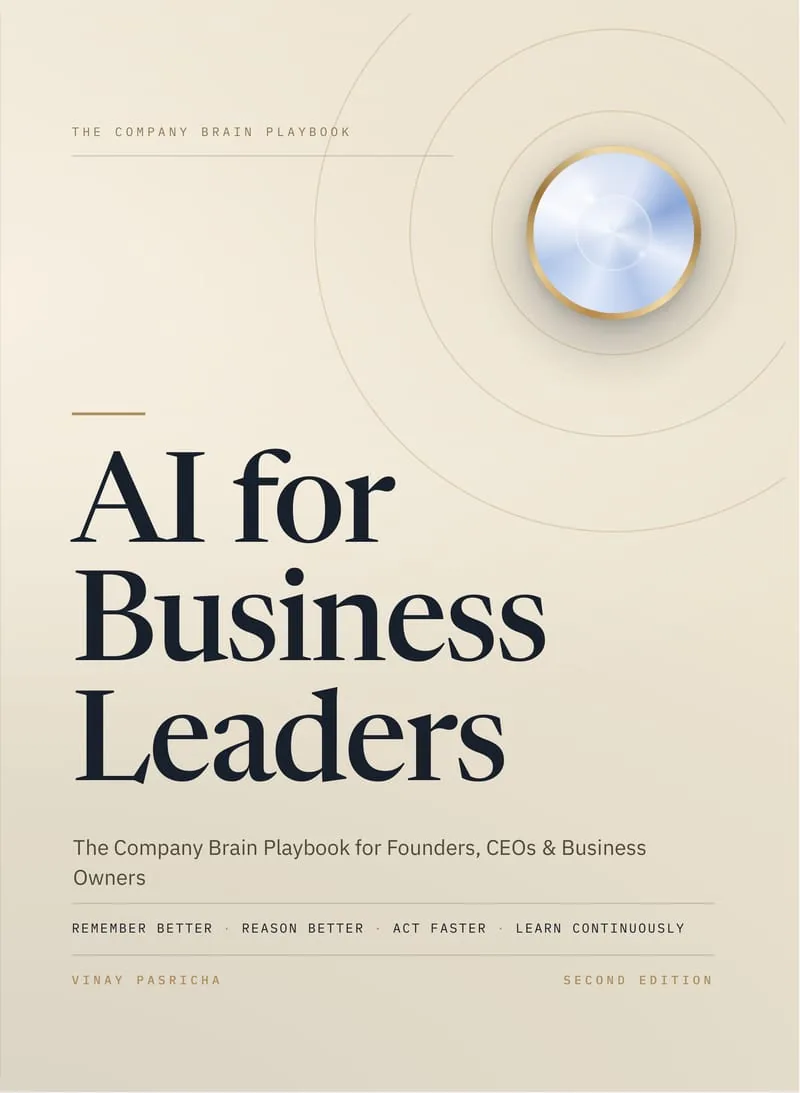
AI for Business Leaders.
AI does not fix chaos. It scales it.
Design the brain first. Then let AI make it stronger.
For founders, CEOs, and senior operators. AI for Business Leaders is structured and unromantic about the technology. It begins with the company underneath the tools, not with a vendor list.
Read the book →The Company Brain, and the tools built on it.
The Second Edition is organised around one idea, the Company Brain: memory, reasoning, action and feedback. These are the frameworks the book builds on it, named as the book names them.
The Company Brain
Memory, reasoning, action and feedback. “AI amplifies the system underneath it. So build a system worth amplifying.”
The Five Things AI Actually Does
It automates work, supports decisions, powers agents, enables creativity and builds organisational memory.
The AI Brain Cell
A small internal team of three roles. The rule behind it: do not outsource your brain.
Minimum Viable Memory
Capture, structure, retrieve and contextualise what the company knows, so it can use what happened.
Automate, Assist, Escalate
Automate the low-risk, reversible work; let AI prepare and a named human approve the judgement-heavy work; escalate the genuinely high-stakes.
Three Levels of AI Strategy
Efficiency, effectiveness, advantage: rising from easily copied to compounding.
The Risk Ladder
Tier 1 (low) to Tier 4 (critical), so that controls match the stakes. AI recommends, humans decide.
The 90-Day AI Leadership Playbook
Diagnose (days 1–15), design (16–30), build and run (31–75), then decide to scale, fix or stop (76–90).
This is not an AI tools guide. It is something else.
It is not a tools guide.
The book names no tools. Tools change quarterly. The frameworks are built to outlast the current tool generation.
It is not a hype document.
AI will not transform everything overnight. Most companies will deploy it badly before deploying it well. The book is honest about that, and is more useful because it is honest.
It is not a panic document.
AI will also not destroy your business overnight. The companies that panic make bad early bets and lock themselves out of better later ones. Clarity beats urgency.
It is not a technical book.
It does not require you to know how transformers work. It assumes you know how to run a business and asks how AI fits inside that craft.
AI does not fix a confused process. It makes the confusion visible — at speed.
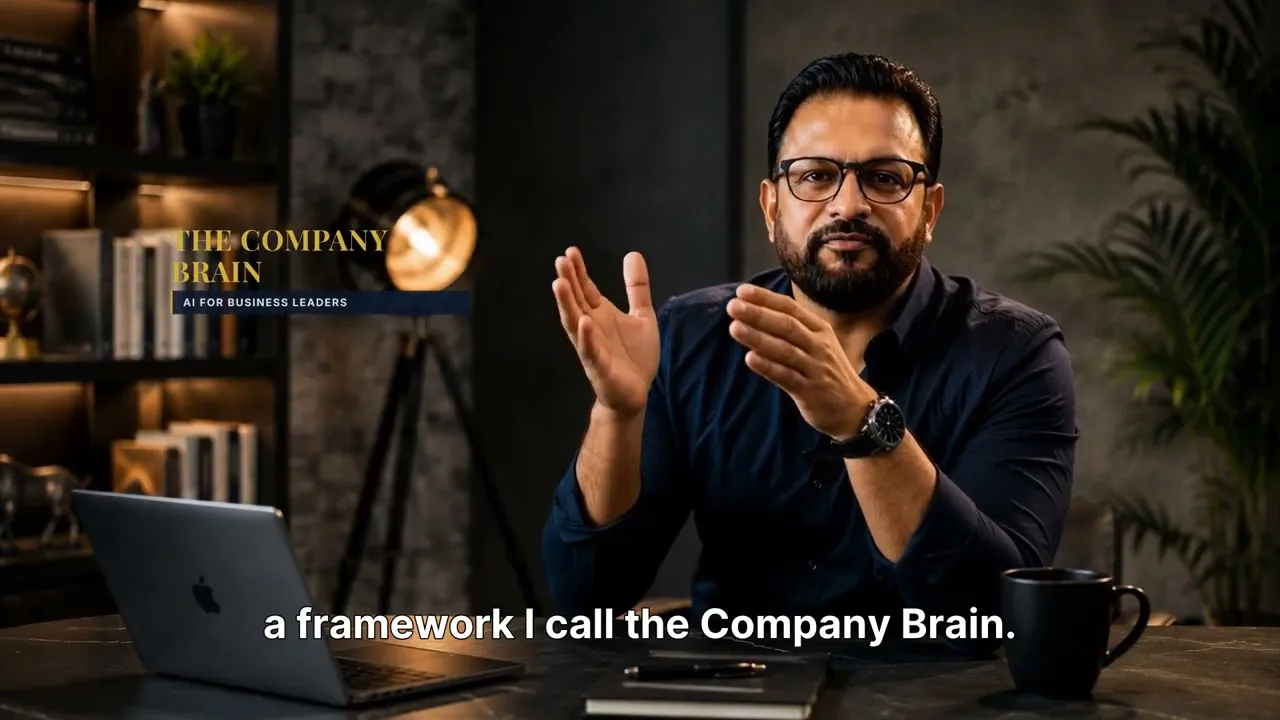
That lesson reaches far beyond hiring. AI amplifies the system underneath it. If a company is unclear, AI accelerates unclear work; if its memory is weak, AI searches weak memory. But the opposite is also true: if a company has discipline, AI compounds it. That is the opportunity this book is about — not AI as a toy or a vendor product, but AI as a way to redesign the operating intelligence of the company. I call that the Company Brain.
The companies that win will not be those that merely announce AI adoption. They will be those that use AI to become more intelligent organisations — remembering better, reasoning better, acting faster and learning continuously.
— From the Author’s Note and “A Final Word Before We Begin,” AI for Business Leaders, Second Edition.
Watch
 0:59 · Short
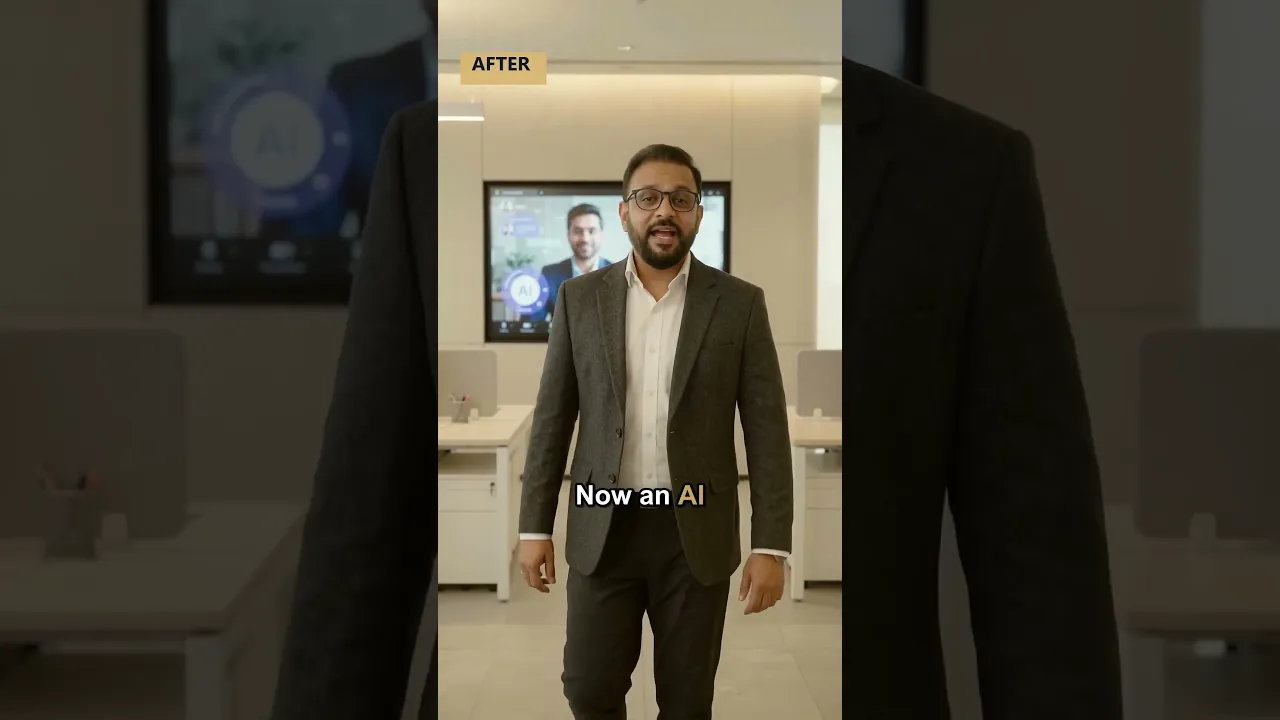
He Wasn't Losing to AI. He Was Losing to a Company That Used It Better
A ₹180 crore business losing to a smaller rival that used AI better. Vinay Pasricha on the Company Brain and rebuilding it on purpose with a 90-day plan.
 0:36 · Short
Why Most AI Projects Fail Inside Organisations
Many leaders fear moving too fast with AI. Vinay Pasricha argues the bigger risk is waiting while competitors learn, build and compound.
 0:36 · Short
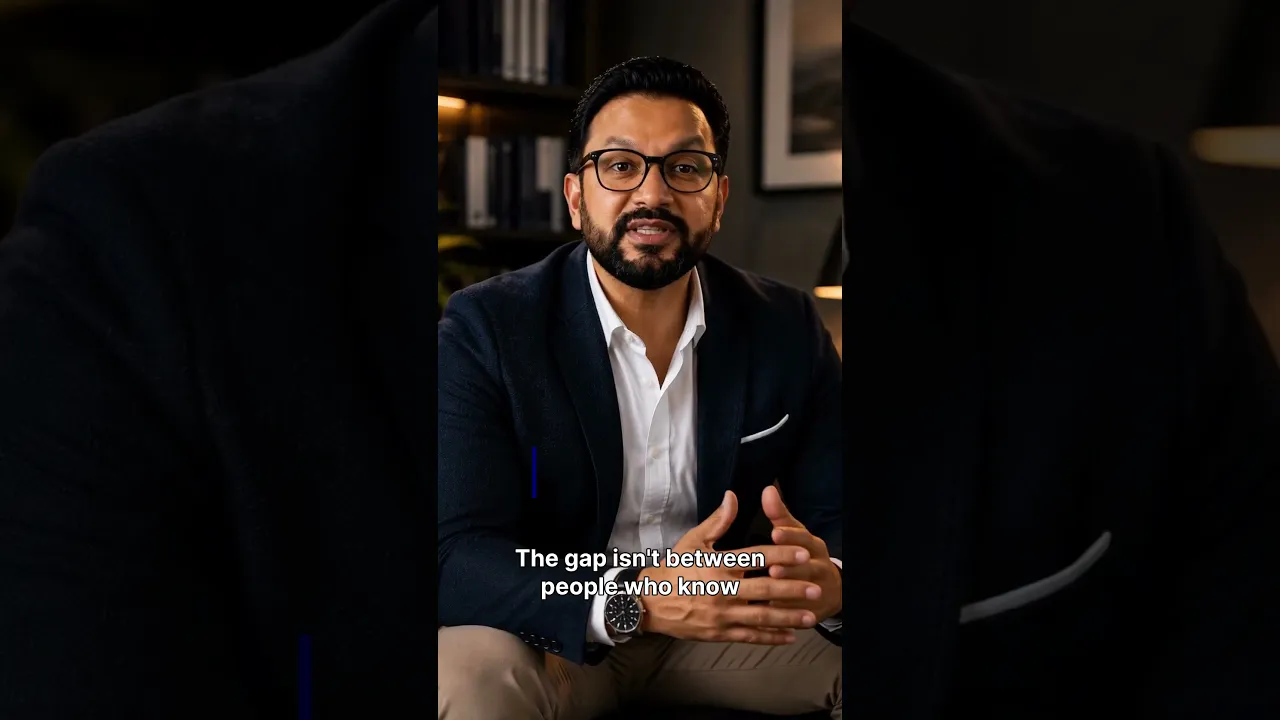
AI Isn't a Tool. It's Your Company's Second Brain.
AI makes information nearly free, so the gap is between people who learn faster, not those who know more. Vinay Pasricha on a shift leaders miss.
