Most failure does not begin in action.
It begins in misunderstanding.
People act too soon because they think they understand. They decide too early because uncertainty irritates them. They mistake conviction for truth, speed for clarity, and familiarity for understanding. Then they call the result judgment.
The SIV Method — Socratic · Iterative · Vinay — is a structured method for examining any important reality through multiple dynamically generated lenses, applying Socratic pressure to every claim, and converging toward one integrated understanding strong enough to support action.
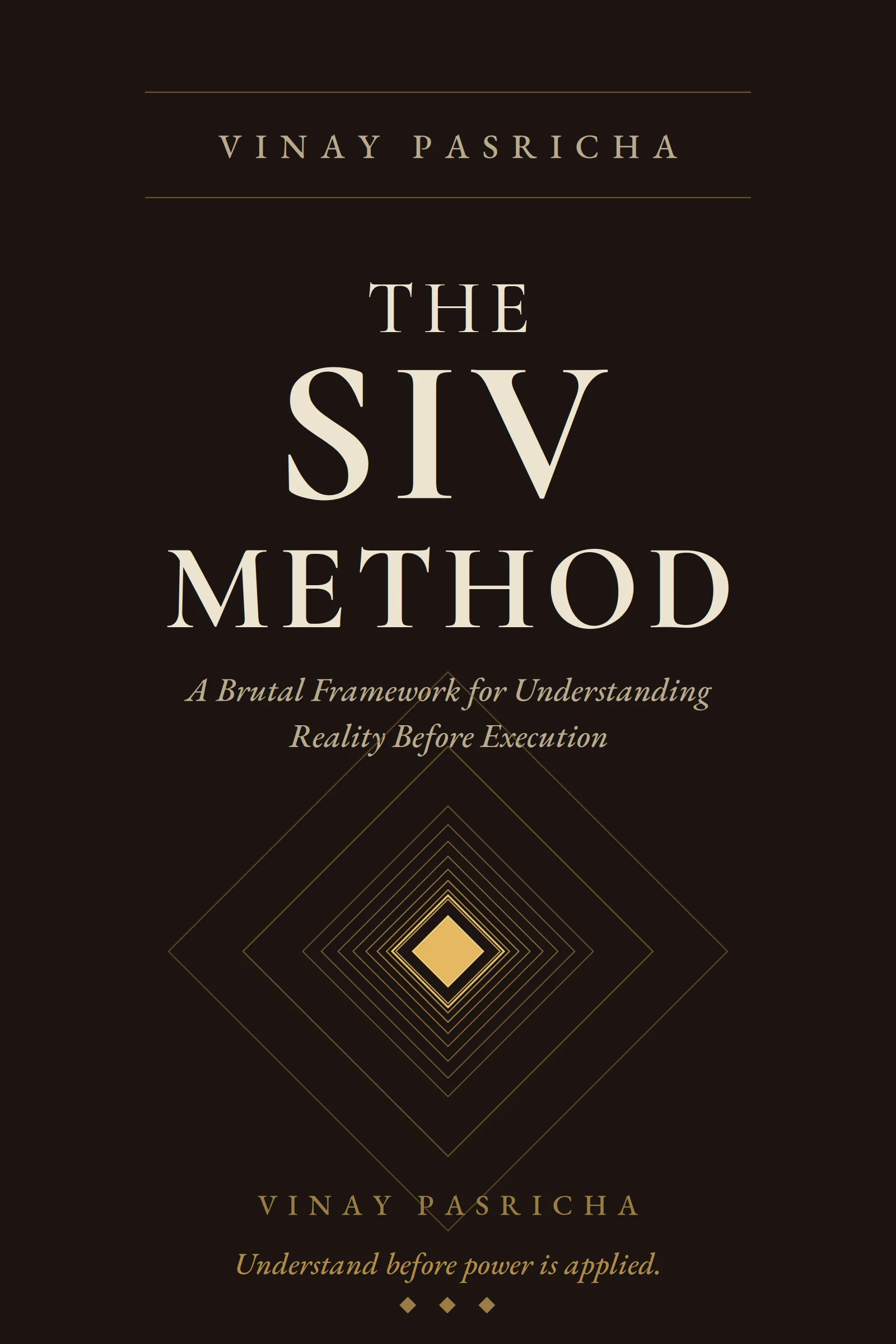
The SIV Method.
A Brutal Framework for Understanding Reality Before Execution
Bring a decision in front of you.
Type it in your own words. The method then walks you through SIV — multiple lenses, Socratic pressure, an integrated understanding. You leave with a one-page thinking artefact. A difficult decision. A recurring conflict. A direction that feels unclear. Begin anywhere.
Begin →Eight steps from premature conviction to earned understanding.
SIV occupies a precise place in serious work: after casual thought, before applied force. It is not execution — that belongs to a separate discipline. Execution applies what SIV first earns the right to apply.
Frame the issue in two sentences.
Not a paragraph. Not a story. Two sentences that state what is being examined, and why it matters. If you cannot state the issue in two sentences, you do not yet know what you are examining.
Generate lenses fresh from the issue.
No fixed set. No checklist of "always use these five perspectives." Each issue demands its own angles — formally named, self-explanatory, case-generated, directional. A lens is not a viewpoint; it is a specific angle that illuminates what others might miss.
Explore lenses one at a time.
Each lens becomes, temporarily, the entire frame of understanding. Early findings constrain later possibilities. Later lenses must accommodate what earlier lenses exposed. The inquiry does not rush.
Subject every claim to Socratic pressure.
Coherence is not evidence. Emotion is not argument. Certainty is not truth. The Socratic engine tests every interpretation against contradiction, structural analysis, and falsification pressure. A claim that cannot survive does not survive.
Weight the lenses qualitatively.
Not all perspectives are equal. Some carry more reality — more explanatory weight — than others. The weighting must be argued for, not assumed, and it must come late in the inquiry, after pressure has done its work.
Converge into one integrated understanding.
Plurality is not the product. The product is the strongest picture that can currently be defended given the inquiry completed. Convergence is not summary — it is reassembly. It distinguishes driver from symptom, central from peripheral.
Produce a confidence statement and an uncertainty statement.
Two distinct outputs. What has become reasonably clear, and what remains obscure. This separation keeps convergence honest. It names the boundaries of what has actually been examined and what remains to be discovered.
Hand the understanding off to execution.
The action that flows from examined ground is built differently than action that flows from initial intuition. Not slower. Apter. The chances of being helpful — rather than randomly applied or counterproductively harsh — are much higher.
SIV exists to do one thing well. Understand before power is applied.
It is not brainstorming.
Brainstorming generates without pressure. SIV generates under pressure. The pressure is what prevents it from becoming creative ideation without traction in reality.
It is not a decision tree.
Decision trees assume a known structure. SIV generates structure from the issue itself. The structure emerges from the inquiry rather than pre-existing.
It is not a debate format.
Debate has winners and losers. People arrive with positions and defend them. SIV has only one goal: contact with reality. No positions to defend, only interpretations to test.
It is not therapy.
Therapy treats the person. SIV treats the interpretation. Therapy asks what the issue means about the person. SIV asks what is actually happening, independent of what it means about anyone's identity or worth.
The mind wants relief more than reality. This is not a personality trait. It is architecture.
People act too soon because they think they understand. They decide too early because uncertainty irritates them. They label reality before they have seen enough of it, then mistake conviction for truth, speed for clarity, and familiarity for understanding. Then they call the result judgement.
What SIV offers is not certainty. No method can offer that. What it offers is a structured path from premature conviction to earned understanding. It offers a discipline for people who want to act, but want to act on something more substantial than the first plausible story their mind produces.
— From Chapter 2 and the Preface of The SIV Method.
Watch

 0:43 · Short
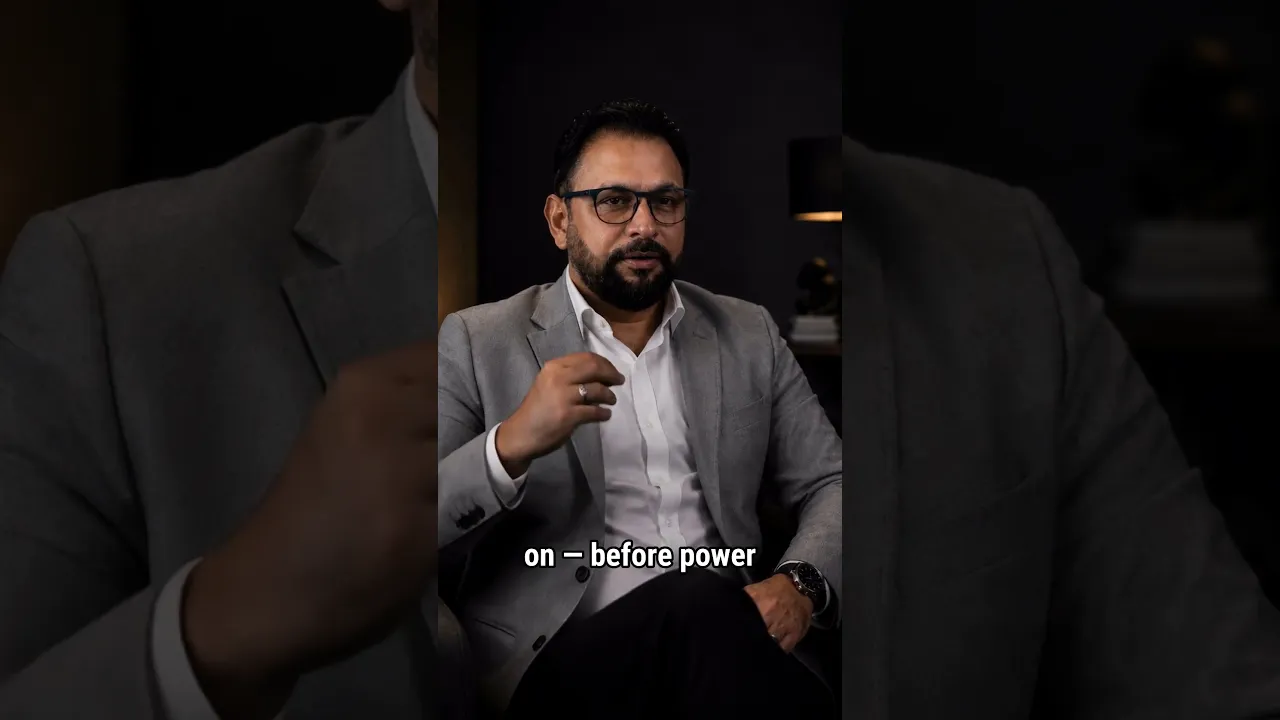
You Never See Reality First — The First Distortion | The SIV Method
Your mind crushes complexity into one clean idea and calls it clarity. Vinay Pasricha on premature closure, the first distortion in The SIV Method.
 0:45 · Short
Certainty You Didn't Earn Isn't Yours — Borrowed Certainty | SIV Method
Smart people fail from borrowed certainty, treating one confident view as all of reality. Vinay Pasricha on using many lenses instead of one.
 0:26 · Short
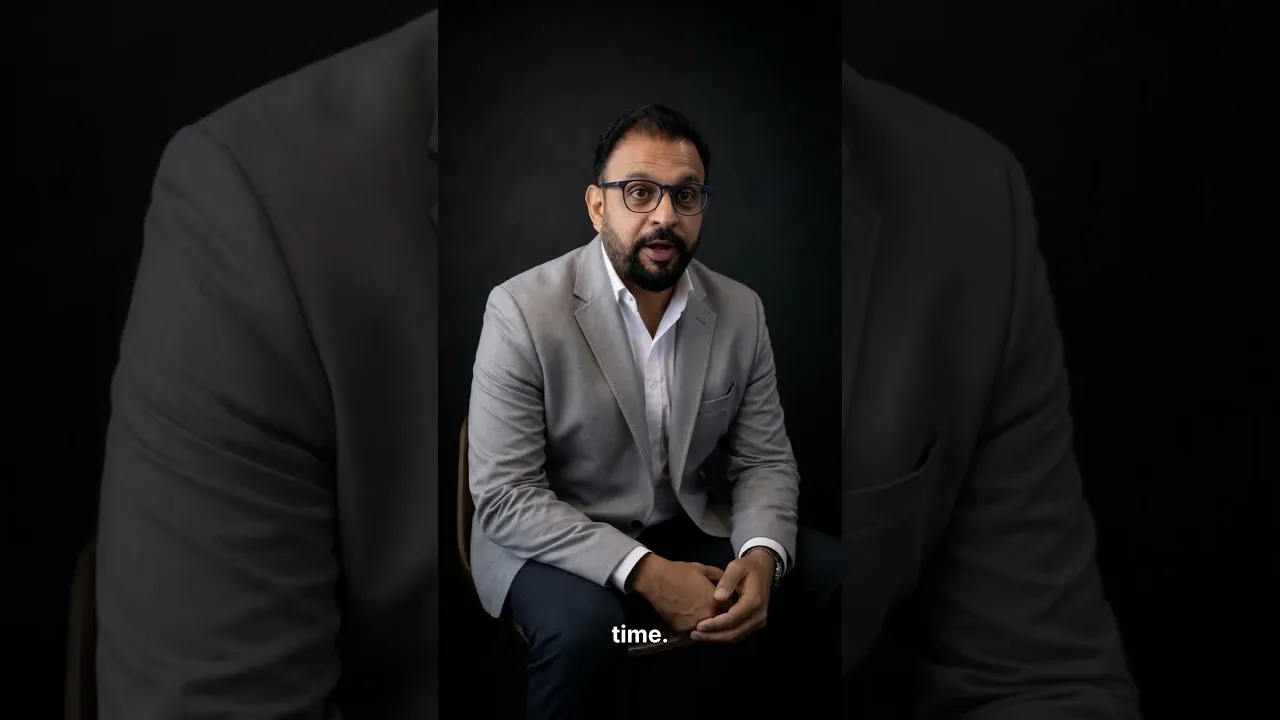
The Learning Trap
Change your diet, gym, sleep and apps at once and you can't tell what worked. Vinay Pasricha on why running five experiments teaches you nothing.