Short answer: AI in recruitment is useful in India today for the slow, repetitive parts of hiring: writing job descriptions, screening large volumes of applications, running first-round interviews, scheduling, and following up with candidates until they join. It is not ready to make the final decision about a person, and it shouldn't be asked to. Start with the one step where your hiring breaks most often, measure it for 30 days, and keep people in charge of judgement.
I'm Vinay Pasricha. I founded GoodSpace AI, a hiring company in Noida. Over seven years we have served about 1,200 corporate customers, mostly in manufacturing and auto, retail and FMCG, and healthcare and pharma, and many of them are MSMEs or supply to them. I also wrote Organizational Frequency, a book about why good people become bad hires. This guide is what I'd tell a founder or HR head who asks me, "Should we use AI in hiring, and where?"
(Disclosure: GoodSpace AI is my company, and it sells AI-led hiring. I've tried to be fair to the other options below.)
What AI actually does in Indian hiring today
Hiring in India has two problems that never go away: volume and follow-through. One post for a sales executive or a plant supervisor can bring hundreds of applications, most of them unsuitable. And the candidate you finally choose can accept the offer on Monday and stop picking up the phone by Friday. AI helps most with exactly these two problems.
Sourcing
What AI does: searches job boards, your own database of past applicants and professional networks for people who match the role, then drafts a personal first message to each.
What to watch: AI finds people who look like the job description. If the description is vague or copied from the last one, the search will be too.
Screening
What AI does: reads every application against the real requirements of the role, not just keywords, and produces a ranked shortlist with reasons. For high-volume roles, this is where recruiters lose the most hours, and where AI gives most of them back.
What to watch: a CV is a record of the past. Screening can rank what people have done. It cannot tell you where they will do well.
Matching
What AI does: compares candidates with roles on more than titles: location, shift, salary expectation, notice period, languages and the kind of work they have actually done.
What to watch: most matching looks only at the person. The other half of a match is the company, and few tools know anything about yours.
Interviews
What AI does: an AI interviewer can run a structured first round at any hour, in the candidate's language, and give the hiring manager a transcript and a summary instead of "candidate was good." At GoodSpace, an AI interviewer now meets every candidate, and managers decide on evidence rather than memory.
What to watch: the interview is still a performance. A fluent candidate can impress a bot as easily as a person. Treat the AI round as a filter and a record, not a verdict.
Assessment
What AI does: generates role-specific tests and work samples, grades the first pass and flags answers that need a human look.
What to watch: tests measure traits out of context. The best assessment is a slice of the real job, done the way your team actually works.
Offers and onboarding
What AI does: tracks every offer until joining day, nudges the candidate on WhatsApp or by phone, answers routine questions, collects documents and runs a basic onboarding checklist. At GoodSpace, every offer is now tracked until the person joins.
What to watch: a nudge is not a relationship. If a selected candidate goes quiet, a person should call.
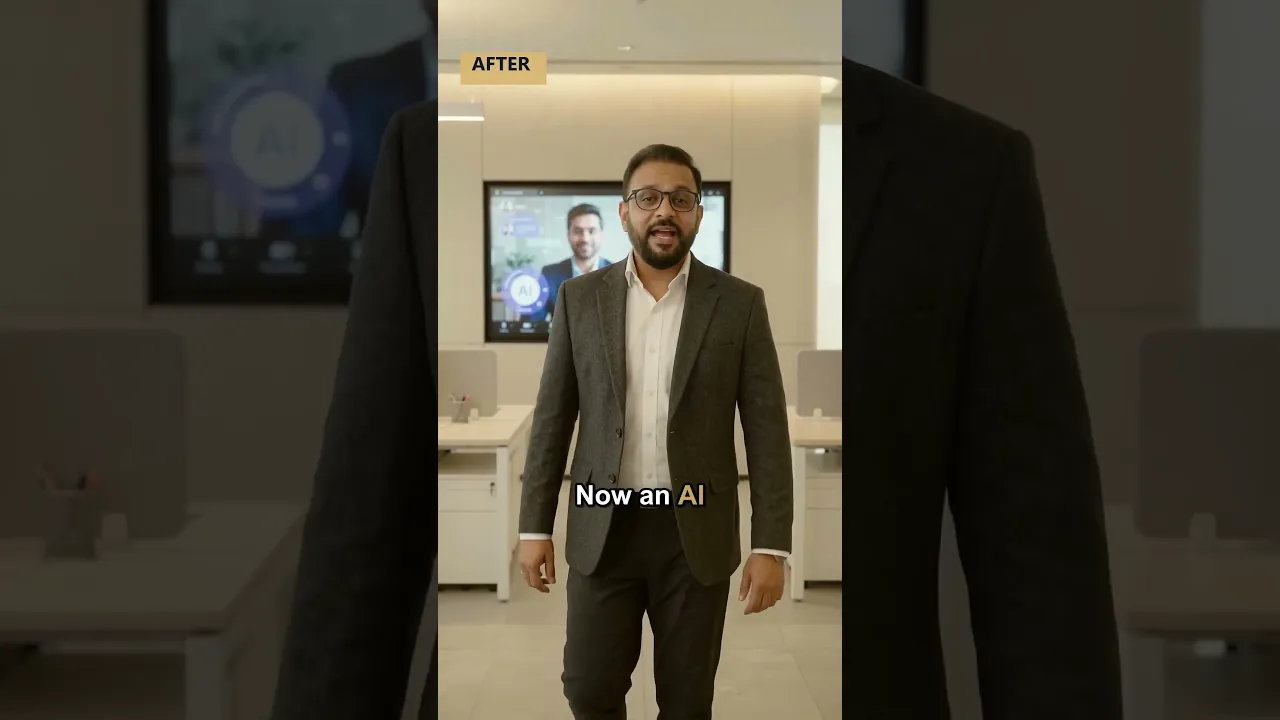
We didn't start by putting AI everywhere. Hiring at GoodSpace used to mean hundreds of CVs for one job, each read by hand, and offers that vanished after acceptance. We put AI exactly where the work kept breaking: screening, follow-up and judging people fairly. The result was the same team, less chaos and better hires. I explain it in a 55-second video: How We Figured Out Where AI Belongs in Hiring. Today our sales runs on an autonomous AI system and our delivery is fully automated, with people handling the exceptions and the judgement calls. On our own numbers: we send the first shortlist within a week, interviews usually take another week, and then it depends on the candidate's notice period, anywhere from one to six weeks. On average that is about four weeks from brief to joining. Our offer-to-join rate is nearly 90%, which I put down to how deeply we match for frequency before anyone is offered a job.
Where AI in recruitment fails
AI in hiring goes wrong in predictable ways. None of them is a reason to avoid it. All of them are reasons to design for them.
It learns the bias in your past
An AI trained on your past hiring will copy your past hiring. The best-known example is Amazon's experimental recruiting tool. Reuters reported in 2018 that it had taught itself to prefer male candidates, penalising CVs that included the word "women's", because it had learned from ten years of applications that came mostly from men. Amazon scrapped it. In India, watch for the local versions of the same problem: college names, pin codes, career gaps (which often mean maternity breaks), and English fluency used as a filter for roles that don't need it.
Fake CVs and fake candidates
AI makes it easy to write a polished CV tailored to any job description, so a perfect-looking CV now tells you less than it used to. In 2022, the FBI's Internet Crime Complaint Center warned of applicants using deepfakes and stolen identities in online interviews for remote jobs. Keep at least one step that a machine can't fake easily: a live conversation with a person, a work sample done in real time, ID checks and reference calls.
Candidate experience
Candidates notice when nobody is on the other side. A bot that can't answer a simple question about the shift timing, a long one-way video interview for an entry-level job, or silence after three rounds all damage your name in the market. In our experience, many Indian candidates prefer WhatsApp and phone calls to email and portals, and many are more comfortable in Hindi or a regional language than in English. Meet them there, and tell them when they are talking to AI.
Over-automation
Automating a broken process makes it break faster. If your job descriptions are vague and your managers can't say what good looks like, AI will simply produce more wrong shortlists, more quickly. Timing matters too. About four years ago, we bet on AI voice agents at GoodSpace. It was too early for voice, and we lost money. Today much more of what we do runs on voice. It isn't everywhere yet, but it is getting there. Experiment early, but invest at scale only when the technology is ready.
What to keep human
- Deciding what the role and the team really need.
- The final hiring decision, and the reasons for it.
- The offer, salary and negotiation conversation.
- Rejecting anyone who reached the final rounds.
- Any complaint about fairness, and any exception to the process.
- Senior and leadership hires, where one wrong decision shapes a whole team.
One more thing to keep human: responsibility for data. Candidate CVs, interview recordings and assessment scores are personal data. India's Digital Personal Data Protection Act, 2023 and its Rules were notified on 13 November 2025, with an 18-month phased timeline for most obligations. Know what your tools store, where, and for how long. (This is general guidance, not legal advice.)
How to start: a 30/60/90-day plan
This works for a 50-person manufacturer and for a 5,000-person retailer. The difference is scale, not steps.
Days 1–30: Pick one broken step
- List where hiring broke on your last ten roles: too many CVs, slow shortlists, interview no-shows, offer dropouts, vague feedback, early exits.
- Pick one role family with volume, such as sales executives, plant supervisors, nurses or medical representatives, and one broken step within it.
- Record today's baseline: days to fill, interviews per hire, offer-to-join rate, and how many new hires are still there after 90 days.
- Write down what "right" looks like for that team: its pace, how decisions are made, how much ambiguity people must handle. This is the frequency step (more below).
- Write one page of AI red lines: what candidate data may go into which tool, and which decisions always need a person.
If you're an MSME hiring a few people a year, you may not need recruitment software at all. A general AI assistant to write clear job descriptions and interview questions, the free WhatsApp Business app for candidate follow-up, and a shared sheet can take you a long way. If you hire in batches, a hiring partner may cost less than building the process yourself. My guide to AI for MSMEs covers the same approach for the rest of the business.
Days 31–60: Pilot
- Run AI on that one step, for that one role family, on real openings.
- For the first two weeks, have a person review a sample of the candidates the AI rejected, not just the ones it selected.
- Check the shortlists for skew: by gender, college, location and language. If a pattern appears, fix the criteria, not just the tool settings.
- Ask ten candidates what the process felt like.
- Hold a 20-minute weekly review: What did AI get wrong? Where did people bypass it? What did it save?
Days 61–90: Decide and scale
- Compare against your baseline. If the numbers moved, write the new process down and extend it to the next role family.
- If they didn't, stop, note why, and try the next broken step. That still counts as progress.
- Train hiring managers to read the evidence AI gives them and to write down why they chose someone.
AI recruitment tools in India: an honest comparison
There is no single "best AI tool for recruitment in India." There are categories, and each is good at different things. Features and prices change often, so check current details on each provider's site and ask for a pilot on your own roles.
| Category | Good at | Weak at | Examples (not endorsements) |
|---|---|---|---|
| Job boards and hiring apps | Reach: large candidate pools and fast posting | Volume without judgement; you still screen and follow up | Naukri, LinkedIn, Apna, Indeed |
| Applicant tracking and HR software | Keeping every candidate, stage and note in one place; many now add AI features | Only as good as your process and job descriptions | Zoho Recruit, Darwinbox, Keka |
| General AI assistants | Job descriptions, interview questions and messages, at low cost | Pasting candidate data in raises privacy questions | ChatGPT, Google Gemini, Microsoft Copilot, Claude |
| Assessment and interview platforms | Structured tests, coding and skills assessments, recorded or AI-led interviews | Tests out of context; poor candidate experience if overused | Mercer Mettl, HackerEarth |
| AI-led hiring partners | Running the whole process, from sourcing to joining, with AI on volume and people on judgement | You depend on the partner's quality; ask how they decide and what they measure | GoodSpace AI (my company), plus recruitment agencies that use AI |
Whatever you choose, ask every vendor five questions:
- Can you show me why a candidate was rejected?
- Is our candidate data used to train your models, and where is it stored?
- Can we test your screening for bias on our own past data?
- How do candidates reach a person when they need one?
- Can we run a paid or free pilot on one role before we commit?
How the frequency idea applies
In Organizational Frequency I argue that every company carries a frequency, every person carries their own, and performance happens when the two resonate. Most bad hires are not bad people. They are mismatches. A talented person in the wrong environment looks mediocre within months.
That is why I say AI has made screening faster, not better. Until a company knows its own frequency, AI only speeds up the wrong question. The book sets out four stages, and each has a clear place for AI:
- Understand. Name your own pace, decision style and tolerance for ambiguity before any AI screens anyone. AI can help you gather what your best people say about how work really gets done, but naming the frequency is a leadership job.
- Discover. Use AI to widen the search, not narrow it: to reach people who would never apply, and to ask how people naturally operate, not only what they have done.
- Validate. Test candidates against the real environment, not the job description: work samples, real conversations, a day in the life. AI can structure and record the evidence. People judge it.
- Grow. After someone joins, use regular check-ins to notice early when person and company drift apart, and act while there is still time.
If you want to see which of the four your company most needs to work on, try the free Find your organizational frequency self-reflection.
FAQ
How is AI used in recruitment in India?
Mostly for high-volume, repetitive work: writing job descriptions, screening applications, running structured first-round interviews, scheduling, and following up with selected candidates until they join. Final hiring decisions are still best made by people.
Will AI replace recruiters and HR teams in India?
It will replace much of the repetitive work, such as reading CVs, scheduling and chasing candidates. It won't replace judgement about people, offer conversations or the relationship with hiring managers.
What are the best AI tools for recruitment in India?
It depends on the problem. Job boards give you reach, applicant tracking software organises the process, AI assistants help with writing, assessment platforms test skills, and AI-led hiring partners run the whole process. Pick the category that fixes your most broken step, then pilot one tool on real roles. (I founded GoodSpace AI, an AI-led hiring partner.)
Can AI reduce bias in hiring?
It can, if it applies the same structured criteria to every candidate and you audit the results. It can also make bias worse, because a model trained on your past hires copies your past preferences. Test shortlists for skew by gender, college, location and language, and keep a person accountable for every decision.
How can an MSME use AI in hiring?
Start small: use a general AI assistant to write clear job descriptions and interview questions, use WhatsApp Business to keep in touch with candidates, and track every offer until joining day. If you hire in batches or for hard roles, a hiring partner that uses AI may be cheaper than building the process yourself.
Should we tell candidates that AI is part of the process?
Yes. Tell them where AI is used, what it assesses and how to reach a person. Candidate data is also personal data under the Digital Personal Data Protection Act, 2023, so be clear about what you collect and why.
How long does it take to see results from AI in hiring?
With one role family and one broken step, you should know whether it is working within 30 to 60 days, provided you recorded a baseline first. The 30/60/90-day plan above lays out the steps.
Where to go next
If you're hiring below the CXO level and want AI-led hiring done for you, hire with GoodSpace AI. For CXO and senior leadership roles, see leadership search. To see what published surveys say Indian CXOs earn, use the free India Leadership Pay Benchmark.
The full argument for hiring by frequency is in my book Organizational Frequency. For AI in the rest of a smaller business, read AI for MSMEs in India: where to start, or browse AI for Indian Business for guides, videos and the course.
Vinay Pasricha is the founder of GoodSpace AI, former Chairman of WLCI Limited, founded through a collaboration with Wigan and Leigh College (Greater Manchester), which trained about 150,000 professionals, and the author of six books, including Organizational Frequency. Watch his videos on YouTube.
Published 28 September 2026 · Last updated 28 September 2026