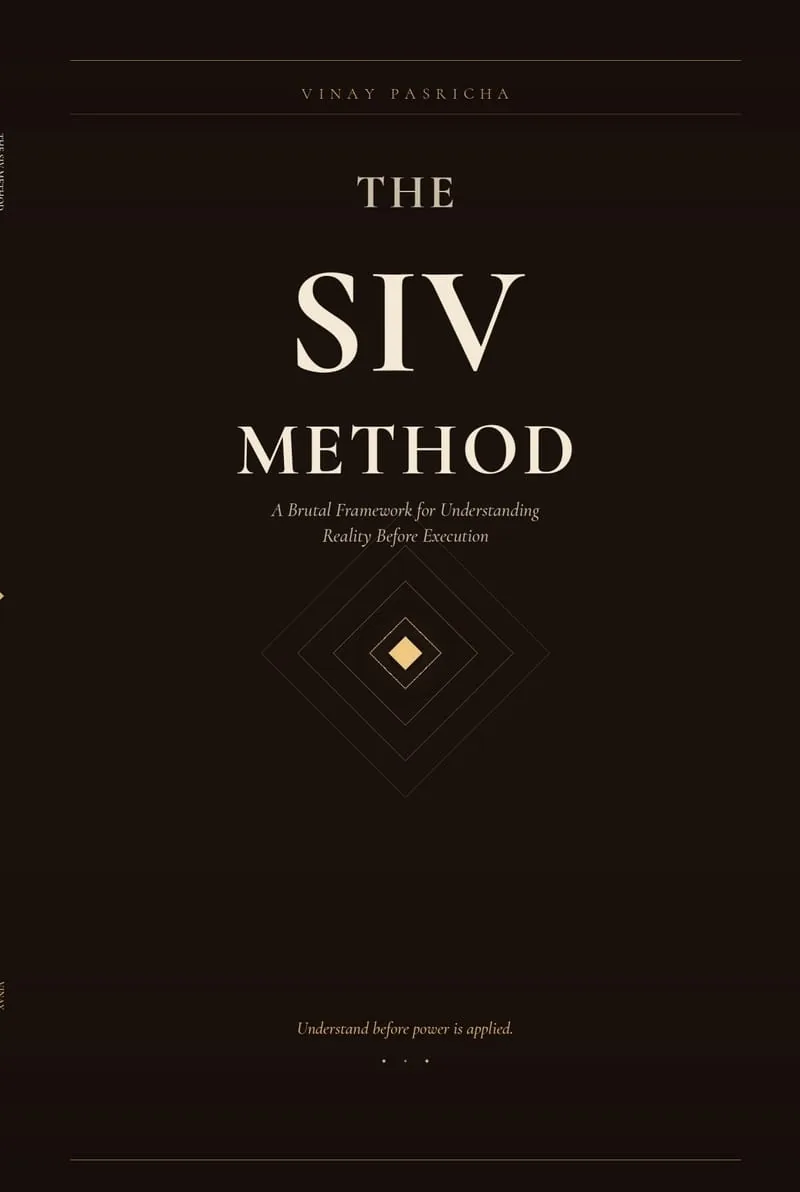
The SIV Method.
by Vinay Pasricha · Before power is applied, reality must be examined hard enough to deserve action.
Most failure does not begin in action. It begins in misunderstanding. The SIV Method — Socratic Iterative Vinay — is Vinay Pasricha’s framework for closing the gap between interpretation and reality before power is applied. Lenses are generated from the issue itself, then held under Socratic pressure until the understanding is strong enough to support a move.
The SIV Method.
Before power is applied, reality must be examined hard enough to deserve action.
For people who decide, and are tired of the cost.
People who work — who decide, lead, build, treat, and shape — in health, relationships, careers, organisations, and policy. It is not a philosophy and not a productivity system. It is a method for anyone tired of paying for shallow interpretation. You can try the same sequence on a live decision, on this site, before you buy the book.
Fourteen chapters, three appendices.
The book moves from the ways understanding fails, in a person, an organisation and a society, to the method itself, then to what seeing costs and how to begin again. Each line below is the line that opens the chapter.
- 01The First DistortionThe second failure always comes first.
- 02The Mind Wants ReliefThe mind wants relief. SIV demands reality.
- 03Premature ClosureThe plausible answer is the most dangerous enemy of the true one.
- 04Borrowed CertaintyCertainty you did not earn is certainty you do not own.
- 05Emotion Is Not UnderstandingFeeling deeply is not the same as seeing clearly.
- 06The Problem of LensesA weak lens decorates thought. A strong lens rearranges it.
- 07Iteration Against IllusionThe purpose of iteration is not delay. It is earned clarity.
- 08Pressure Before CommitmentIf a claim cannot survive pressure, it has no right to guide action.
- 09From Personal Error to Organisational ErrorEvery organisation is a conspiracy of unexamined frames.
- 10From Leadership Failure to Societal FailureCivilisations decline when they lose the ability to see clearly.
- 11The SIV Method ProperUnderstand before power is applied.
- 12Understanding Before ForceIn a world that runs on premature certainty, the discipline of seeing may be enough.
- 13The Cost of SeeingClarity is not free. It is purchased with comfort you will never recover.
- 14The Discipline of Beginning AgainThe method does not end. It begins again, each time with slightly less illusion.
- A·IThe Canonical SIV Statement
- A·IIThe Fixed SIV Warning
- A·IIICompact Doctrine
The method, in eight moves.
- Frame the issue in two sentences: what is being examined, and why it matters.
- Generate lenses fresh from the issue, not from a checklist. Each lens is named and points at a specific question.
- Explore the lenses one at a time. Early findings constrain later ones.
- Put every claim under Socratic pressure. Coherence is not evidence. Emotion is not argument. Certainty is not truth.
- Weight the lenses, late in the inquiry, and argue for the weighting.
- Converge on one integrated understanding. Convergence is not summary. It is reassembly.
- Write a confidence statement and an uncertainty statement.
- Hand the understanding to execution as a prepared transfer, not a vague impression.
The book frames one example in two sentences: a parent trying to understand why a teenage daughter has withdrawn. It also explains where AI fits. AI is a lens engine that holds more angles and sustains more iterations. It is not an answer machine, and the person stays responsible for judgment. SIV is not brainstorming, a decision tree or a debate. Acting on what you have understood is a separate discipline, which the book calls VIP, Vinay’s Improving Process. Vinay’s book on execution is The Execution Doctrine. You can try the sequence on a real decision on the decisions path, or watch Why Smart People Misread Reality.
The mind wants relief more than reality. This is not a personality trait. It is architecture.
People act too soon because they think they understand. They decide too early because uncertainty irritates them. They label reality before they have seen enough of it, then mistake conviction for truth, speed for clarity, and familiarity for understanding. Then they call the result judgement.
What SIV offers is not certainty. No method can offer that. What it offers is a structured path from premature conviction to earned understanding. It offers a discipline for people who want to act, but want to act on something more substantial than the first plausible story their mind produces.
— From Chapter 2 and the Preface of The SIV Method.
Before you buy.
What is The SIV Method by Vinay Pasricha?
A framework for understanding reality before execution. SIV stands for Socratic Iterative Vinay. It moves a person from premature conviction toward an understanding strong enough to support action.
Who is The SIV Method for?
People who make decisions and are tired of paying the cost of shallow interpretation — in health, relationships, careers, organisations, and policy. It is a method for people who work, not a self-help programme.
How long is The SIV Method?
The Kindle edition (ASIN B0GX27LGJX) is 46 pages. Amazon lists the publication date as 13 April 2026, first edition.
Can I try the method without the book?
Yes. The decisions path on this site walks a real decision through SIV and produces a one-page thinking artefact. No account. The book is the full instrument; the session is the opening move.
What does the method actually produce?
One integrated understanding, with a confidence statement that names what has become reasonably clear and an uncertainty statement that names what remains obscure. It is handed to execution as a prepared transfer, not a vague impression.
Does SIV use AI?
It can. The book describes AI as a lens engine: a way to generate more angles, apply more pressure and sustain more iterations than an unassisted mind comfortably can. It does not treat AI as an answer machine. The person stays responsible for judgment.
Watch


 0:45 · Short
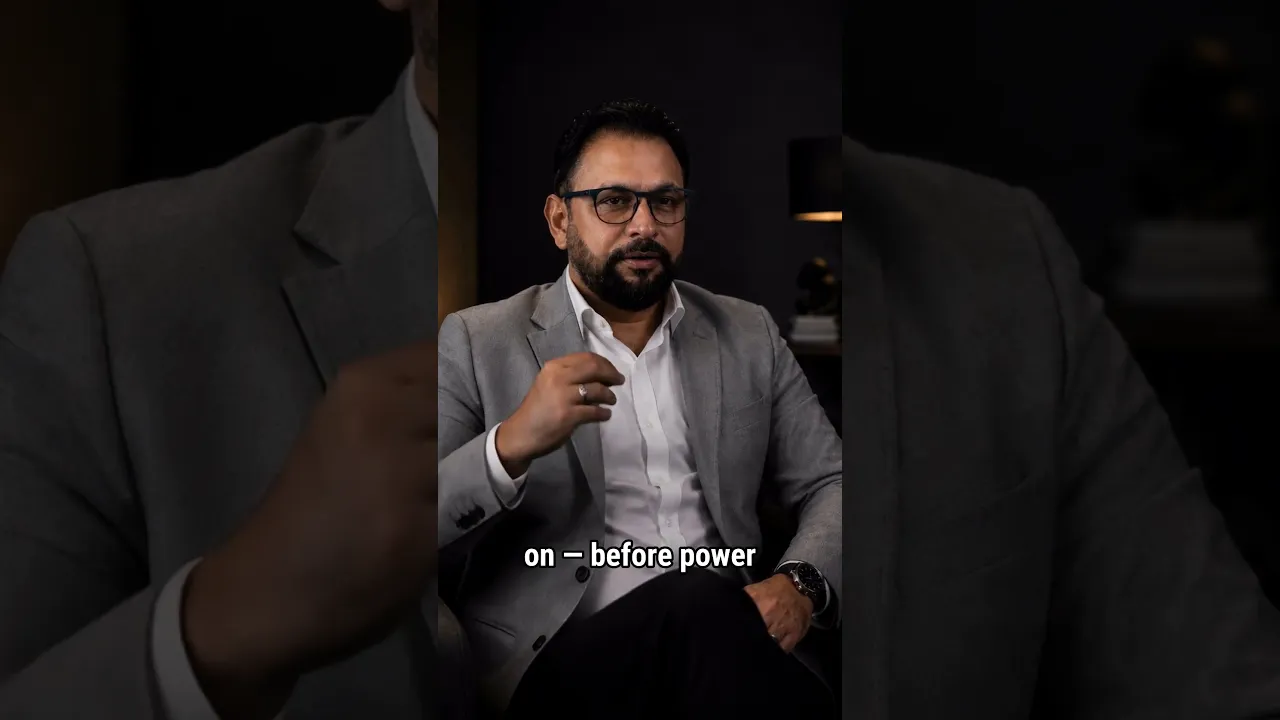
Certainty You Didn't Earn Isn't Yours — Borrowed Certainty | SIV Method
Smart people fail from borrowed certainty, treating one confident view as all of reality. Vinay Pasricha on using many lenses instead of one.
 0:33 · Short
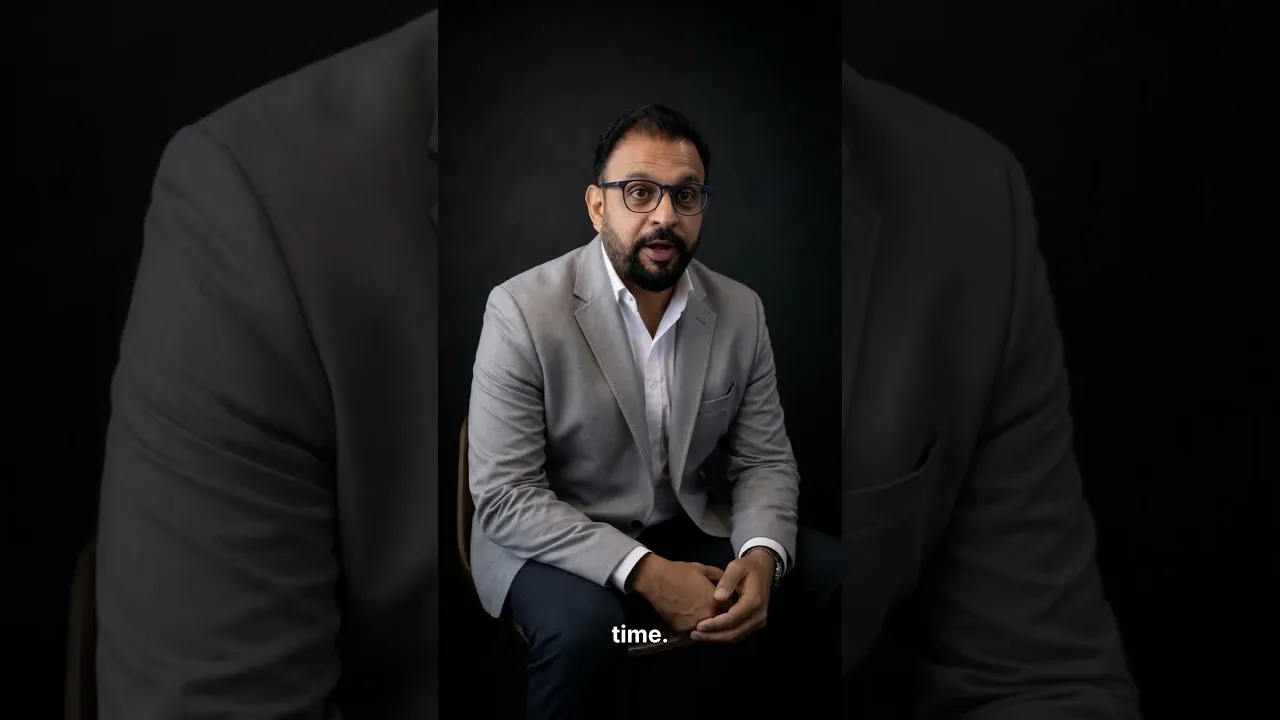
Pressure Test Your Ideas Before Reality Does | The SIV Method
One rule before any commitment: attack your own idea on purpose. Vinay Pasricha on Socratic pressure from The SIV Method.
 0:26 · Short
The Learning Trap
Change your diet, gym, sleep and apps at once and you can't tell what worked. Vinay Pasricha on why running five experiments teaches you nothing.