Hiring is not convincing people to fit somewhere.
It is discovering where they already belong.
For a hundred years, companies have hired through resumes, interviews, and gut feel — static representations of dynamic human beings. They tell us what someone has done. They cannot tell us where someone belongs.
Organizational Frequency is a new doctrine for hiring in the age of intelligent discovery. Every company carries a frequency. Every person carries their own. Great performance happens when the two resonate.
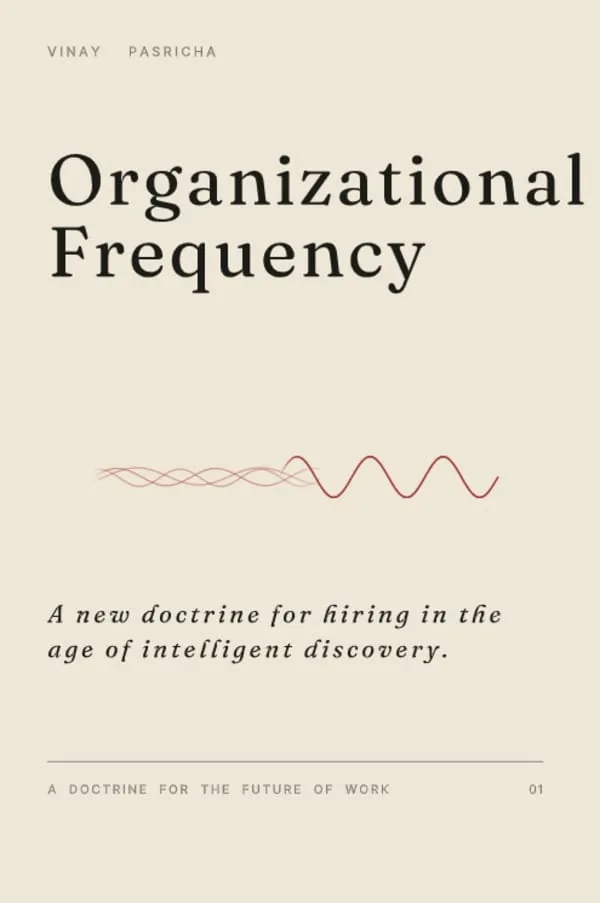
Organizational Frequency.
Hiring is not convincing people to fit somewhere. It is discovering where they already belong.
Stop hiring resumes. Start discovering people.
Organizational Frequency is the first book in a series on the future of work — a short, dense doctrine for leaders, operators and founders who want to hire the way the next century will demand.
Four stages from recruiting to intelligent discovery.
The doctrine is built on four stages, each a discipline of its own — and each contradicting how most companies still hire today. They are not steps in a funnel. They are postures a hiring organisation must adopt before any individual hire is made.
Understand your own frequency.
Before you can hire for resonance, you must know what you are. Most companies do not. They have a values poster and a job description, but no honest map of their pace, decision style, tolerance for ambiguity, and intellectual register. Until the frequency is named, every hire is a guess.
Discover where the person actually belongs.
Stop asking what they have done. Start asking how they naturally operate. A resume is a record of where someone has been; it does not reveal where they could thrive. Discovery uses signal — conversation, work product, real interactions — to surface frequency, not credentials.
Validate against the environment, not the role.
The role is a snapshot. The environment is a living system. A candidate who would thrive under a different leader, in a different team, at a different stage, is not a bad hire — they are the wrong context. Validate by simulating the real environment, not by interviewing for the role description.
Grow both the person and the company together.
Hiring is not the end. Resonance evolves. A person's frequency shifts as they mature; the company's shifts as it scales. Growth is the discipline of keeping both in alignment — and noticing, honestly, when they no longer are.
This is not culture fit. It is something more fundamental.
It is not "culture fit."
Culture fit usually means "do they look like us, talk like us, agree with us." Frequency resonance is structural — about pace, decision style, and operating register, not about agreement or sameness.
It is not personality testing.
Personality tests measure traits, abstracted from context. Frequency is contextual — the same person carries different frequencies in different environments. The map only matters in the territory.
It is not gut feel.
"I just had a feeling about them" is the most common — and most expensive — failure mode in hiring. Intelligent discovery makes the gut visible: it names what the gut was sensing, and tests whether the signal is real.
For what a wrong call costs in rupees, read What a bad hire really costs in India.
It is not just AI screening.
AI tools have made screening faster, not better. Until the company knows its own frequency, AI just accelerates the wrong question. The doctrine comes before the algorithm.
For where AI does help, and what to keep human, read AI in recruitment in India.
Most hiring failures are resonance failures disguised as performance failures.
A resume is a snapshot of a person who keeps moving. An interview is a performance of a working relationship. A job description is the passport photo of a role that has already changed.
These are not bad tools. They are the wrong category of tool. We have been trying to capture the shape of a river with a still photograph, and then blaming the river when the photograph fails to predict what it will do tomorrow.
We believe we are measuring fit. We are not. We are measuring the performance of fit.
— From the Prologue and Chapters 1 and 7 of Organizational Frequency.
Watch
 1:27 · Video
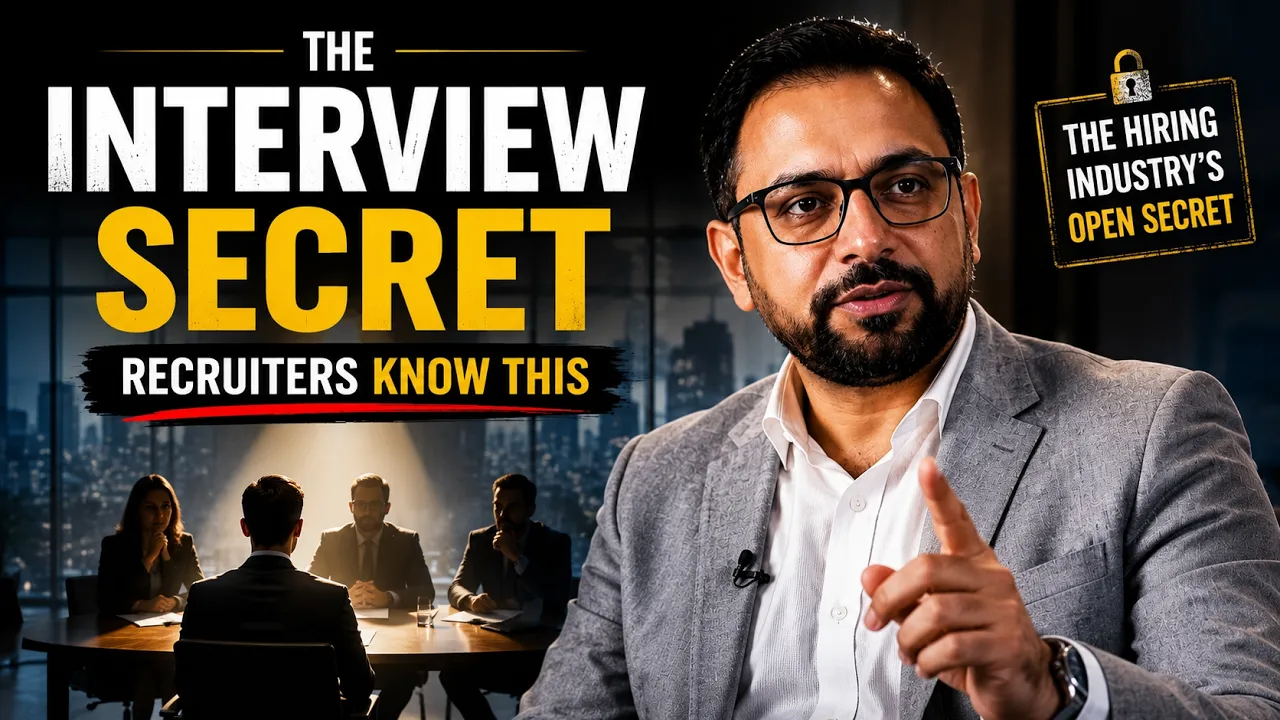
The Hiring Industry's Open Secret: Interviews Are Performances | Vinay Pasricha
Vinay Pasricha on 'professional theater': why the skill that wins an interview isn't the skill that wins the job, and why hiring must shift to discovery.
 0:53 · Video
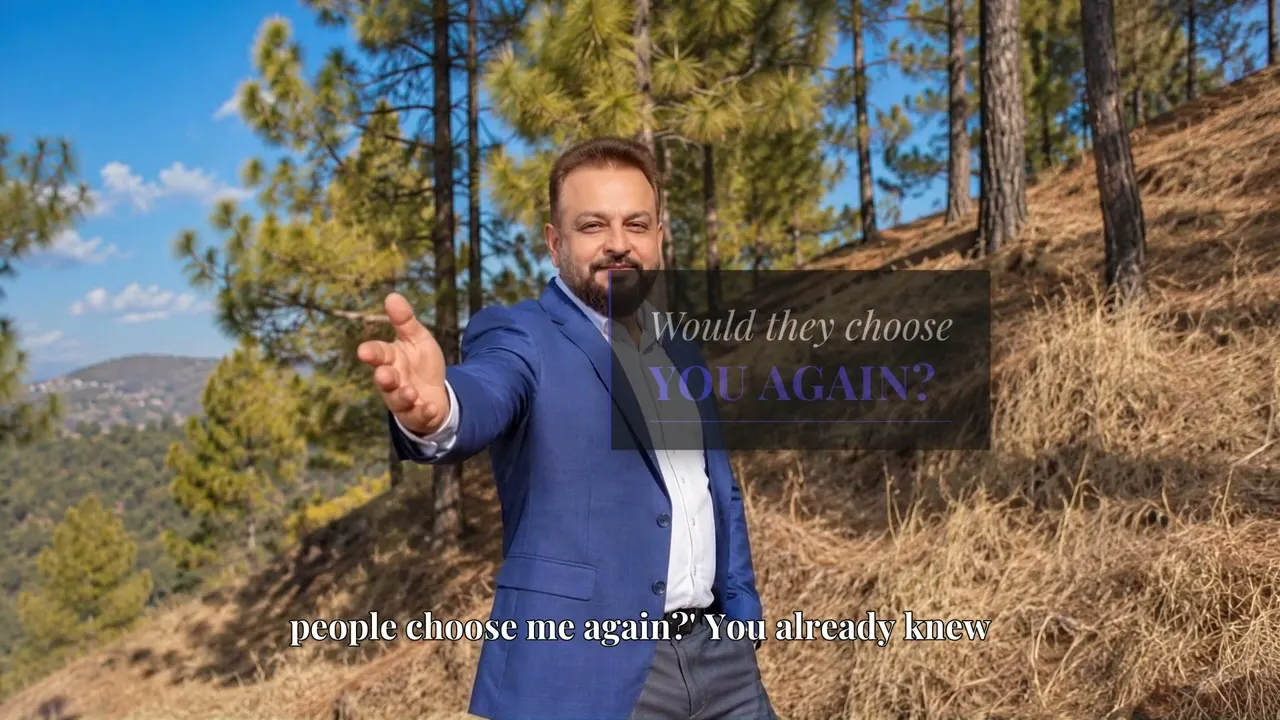
Would Your Best Employee Hire YOU Back?
A one-question retention test for leaders: if your best people could choose their company again today, would they choose yours? Vinay Pasricha explains.
 0:55 · Short
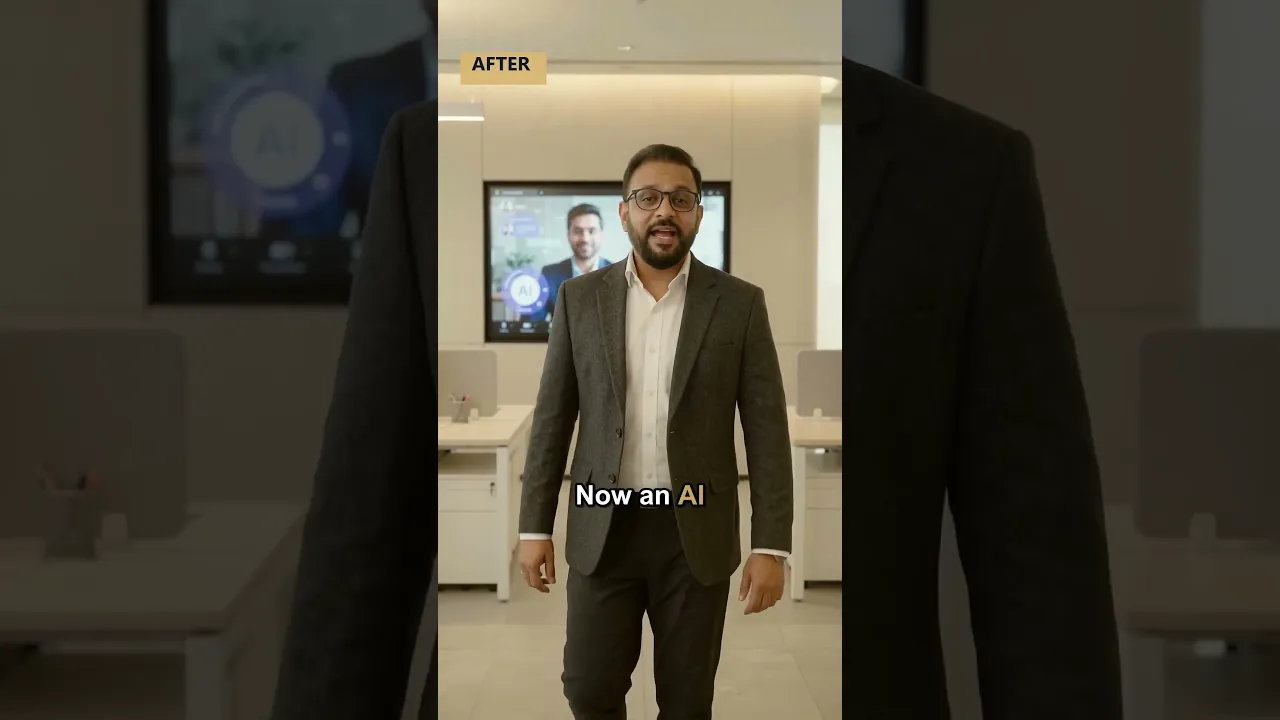
How We Figured Out Where AI Belongs in Hiring
How GoodSpace put AI only where hiring kept breaking: screening, offer follow-up and evidence-based decisions. Same team, less chaos, better hires.
Hiring below the CXO level? GoodSpace AI can help.
For employees and staff below the CXO level: frontline teams, mid-level professionals, managers, sales, operations and more. GoodSpace AI is the hiring company Vinay founded, based in Noida, with about 80 people, about seven years in business and about 1,200 corporate customers across India.
It is strongest in manufacturing and auto, retail and FMCG, and healthcare and pharma. GoodSpace puts AI where hiring keeps breaking: screening, offer follow-up and evidence-based decisions.
Share the mandate here. It is recorded and sent to Vinay directly.
