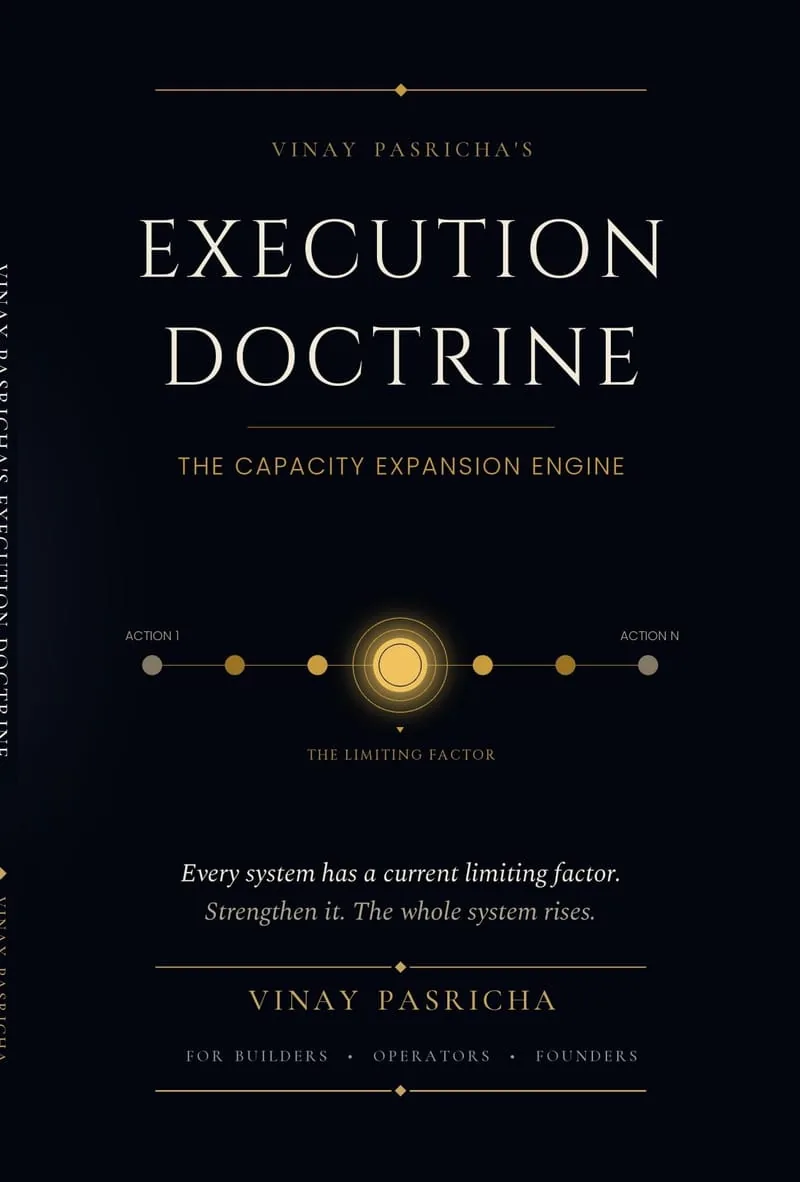
The Capacity Expansion Engine is the repeating cycle through which systems become progressively stronger. It is built on top of the standard Plan-Do-Check-Act (PDCA) cycle. The PDCA cycle is a proven framework for continuous improvement. But the Capacity Expansion Engine refines the PDCA cycle with a specific discipline: in each cycle, the current governing constraint is identified and strengthened.
The cycle operates as follows:
First, PLAN. The execution sequence is clearly defined. Every step from Action 1 to Action N is articulated. The desired output is specified. The success criteria are established. The timeline is set. The responsibilities are assigned. This is not casual planning. It is formal, written, and sufficiently detailed that someone unfamiliar with the work could understand what is supposed to happen.
Second, DO. The plan is executed. Work proceeds according to the defined sequence. The executor does what was planned. This is not where improvement happens. This is where the current system's limitations become visible. Friction appears. Delays occur. Bottlenecks manifest. Failures surface. This is the stage where the system reveals what is actually limiting its output.
Third, CHECK. The execution is analyzed. What was supposed to happen is compared to what actually happened. Output is measured against the intended outcome. Delays are identified. Failures are examined. But crucially, in this doctrine, the Check stage includes a specific discipline: identifying the current limiting factor. What element of the system most prevented full and timely output? Where did friction accumulate? Where did the process slow, break, or fail? That is the governing constraint.
Fourth, ACT. The plan is revised for the next cycle. Specifically, the design of the next cycle is modified so that the identified constraint is strengthened. If the constraint was a skill deficiency, training is added. If it was a process step that was too slow, that step is redesigned. If it was inadequate information, information systems are improved. If it was a resource shortage, resources are reallocated. The constraint is not ignored. It is specifically addressed.
Then the cycle repeats.
In the second cycle, the plan is executed at a higher level of strength because the previous constraint has been addressed. New output is produced. In the Check stage, a new limiting factor may emerge — perhaps something that was not visible as a constraint in cycle 1 because an earlier constraint masked it. This new constraint is identified. In the Act stage, the plan for cycle 3 is modified to strengthen this new constraint. The cycle continues.
Over time, this produces something remarkable.
With each cycle, the system becomes stronger. Not through general effort or broad improvement, but through targeted strengthening of specific constraints. The output in cycle 5 is higher than in cycle 1, not because everyone is working harder, but because the system itself has been progressively refined. Friction has been reduced. Bottlenecks have been opened. The path from intention to outcome has been clarified. The system has expanded its capacity.
This is the Capacity Expansion Engine.
It is called an 'engine' because, once established, it becomes self-perpetuating. Each cycle produces learning about what constrains output. Each Act stage incorporates that learning into the next cycle. The system becomes progressively more intelligent about its own limitations and progressively more capable of addressing them. Over time, a well-run system under this discipline becomes measurably stronger and more reliable than a system driven by effort alone.
Several principles govern the engine.
First, the discipline of one constraint. In any given cycle, the primary focus is on strengthening the current governing constraint. This does not mean ignoring all other problems. But it means that primary improvement effort is concentrated on the point that most limits output. This focus produces better returns than diffuse effort.
Second, the clarity of the sequence. Every execution cycle begins with a clear definition of the intended action sequence, from Action 1 to Action N. Without this clarity, it is impossible to identify where the sequence fails or where constraints emerge. Vagueness about the work leads to vagueness about improvement.
Third, the honesty of constraint identification. The constraint must be identified based on what actually limited output in the cycle that just completed, not on what the executor wishes were true or what would be easiest to address. This requires discipline and sometimes uncomfortable honesty.
Fourth, the specificity of the Act stage. When a constraint is addressed, the improvement must be specific to that constraint. Vague improvements or broad initiatives produce vague results. Targeted improvements produce visible capacity gains.
The Capacity Expansion Engine is not automatic.
It requires discipline, honest diagnosis, willingness to focus effort, and commitment to structural improvement over mere activity. Many organizations run PDCA cycles that are missing one or more of these elements. They plan and do and check and act, but they do not focus the Act stage on the specific constraint, so the system does not demonstrably strengthen.
The engine must be operated deliberately.
But for those who run it with discipline, the results compound.
Year 1 of operation under this discipline produces modest improvement. Year 2 produces more substantial improvement as the system becomes smarter about its own constraints. Year 3 produces marked improvement as the path from intention to outcome has been substantially clarified. By Year 5, the system is operating at a level of capacity and reliability that would be unrecognizable to the operator from Year 1.
That is how execution rises from effort into mastery.
Text from the manuscript published at /library/execution-doctrine/full-text.txt. © 2026 Vinay. All rights reserved.