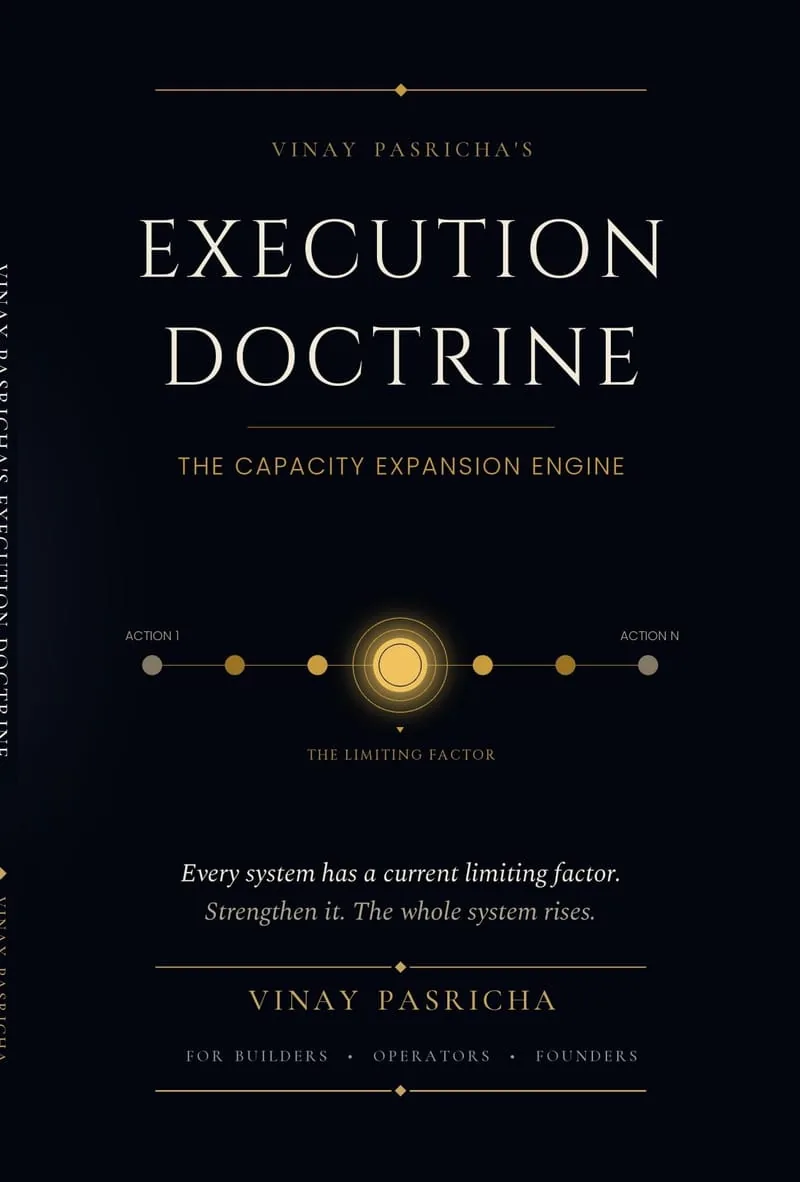
Strengthening the Next Cycle: turning a diagnosis into a change.
Chapter 8 · “Strengthening the Next Cycle” · by Vinay Pasricha
Once you know the constraint, how do you actually fix it?
Chapter 8 is about the Act stage, where understanding becomes operational improvement. The book calls it the beginning of design, not the end of analysis, and frames one question: given this constraint, how will the next cycle’s sequence be different? The answer depends on the type. A skill gap may call for training, mentoring, replacement or restructured work; a process bottleneck for redesign, acceleration or removal of the step; an information gap for better information systems or clearer decision frameworks; a resource shortage for reallocation, acquisition or better deployment.
The governing principle is specificity: not “let’s make everything better”, but this constraint, strengthened in this way. The fix must also be executable within the next cycle: designed in, resourced and ready when the cycle begins. Where a constraint needs more investment than one cycle allows, the chapter accepts a phased plan, provided each cycle moves the system closer to addressing it.
Success criteria are set before the cycle starts. If the constraint was slow decision-making, the executor defines what “faster” means, so the next Check stage can show whether the change worked. The chapter also warns against over-improvement: the aim is to strengthen the constraint enough that capacity expands and the next constraint becomes visible, not to perfect it. The stage ends with a revised, documented plan, committed resources and a set timeline.
Vinay’s short talk The Loop Nobody Runs Properly is about this same stage, the point where Plan-Do-Check-Act usually breaks.
But over-improvement creates waste.
— Chapter 8, “Strengthening the Next Cycle”
Chapter 8 in full.
The complete text of “Strengthening the Next Cycle”, 844 words, as published in the manuscript on this site.
When the constraint is a leadership seat.
Vinay Pasricha leads searches for leadership and top-management roles in India: CXOs, the founder’s bench and functional heads. Tell him about the organisation and the role. The enquiry is recorded and sent to him directly.