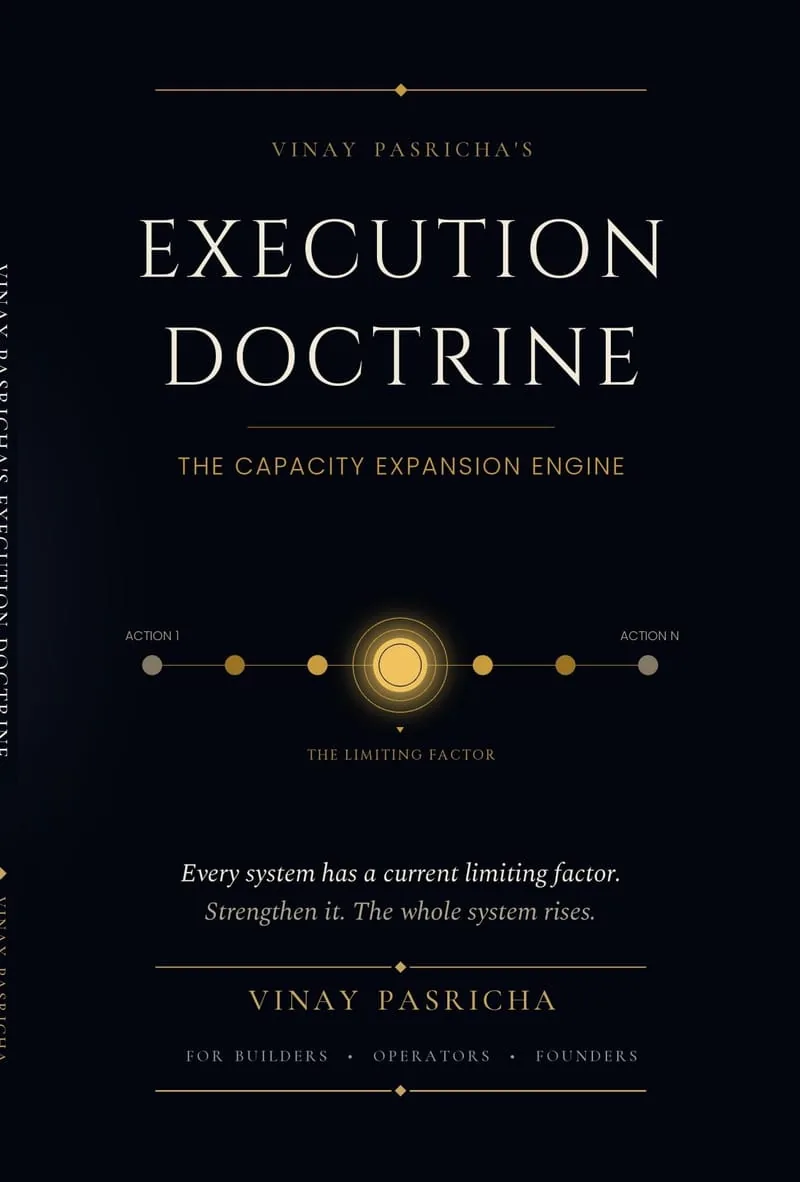
Once the primary constraint has been identified with reasonable accuracy, the Act stage of the cycle transforms that understanding into a strengthened sequence for the next cycle.
This is where intellectual understanding becomes operational improvement.
The Act stage is not the end of analysis. It is the beginning of design. The executor must now answer a specific question: given that this is the constraint, how is the next cycle's sequence going to be different so that this constraint is specifically addressed?
The answer depends on the nature of the constraint.
If the constraint is a human constraint — a skill deficiency, for example — then the Act stage might involve training, mentoring, replacement, or restructuring of work. If the constraint is a process bottleneck, then the Act stage might involve redesign, acceleration, or removal of the bottleneck step. If the constraint is an information gap, then the Act stage might involve better information systems or clearer decision frameworks. If the constraint is a resource shortage, then the Act stage might involve reallocation, acquisition, or more efficient deployment.
The key principle is specificity.
The improvement must be targeted at the identified constraint. Not broad improvement. Not general enhancement. Not 'let's make everything better.' Instead: this is the constraint, and this is specifically how we are going to strengthen it.
Specificity of improvement produces results.
A manufacturing process that identifies the bottleneck in packaging can add packaging capacity. Output rises immediately. A sales team that identifies inadequate prospecting as the constraint can build a prospecting system. Sales rise markedly. A product team that identifies slow design reviews as the constraint can accelerate the review process. Delivery speed increases. In each case, the specific constraint was identified and specifically addressed.
The Act stage must also be executable within the next cycle.
It is not sufficient to identify the constraint and decide to fix it someday. The improvement must be designed into the next cycle. The sequence for the next cycle must be different. The resources must be allocated. The design must be implemented. The change must be ready when the cycle begins.
This is sometimes challenging.
A constraint that requires significant investment to address may not be addressable in a single cycle. In that case, the Act stage produces a phased improvement: what can be done in the next cycle to begin addressing the constraint? What can be done in the cycle after that? This phased approach is valid. The key is that each cycle moves the system closer to addressing the true constraint.
The Act stage also requires clarity about success criteria.
If the constraint was slow decision-making, what does 'faster decision-making' mean? How will the executor know that the improvement has been effective? This requires establishing clear measures before the cycle begins. Then, in the Check stage of the next cycle, the executor can assess whether the improvement actually addressed the constraint and whether output rose accordingly.
Without clear measures, improvement becomes theoretical.
With clear measures, improvement becomes observable. The executor can see whether the change actually worked. If it did, the improvement is incorporated into the next cycle. If it did not, a different approach is tried.
The Act stage is also where the executor's judgment comes into play.
Constraint identification can sometimes be accurate. But the solution to the constraint may be unclear. There may be multiple ways to address it. The executor must use judgment to select the most promising approach. This is where experience and wisdom matter. An executor who has seen many cycles knows that certain types of solutions work well for certain types of constraints. This knowledge guides the Act stage. Interestingly, the Act stage is also where the executor must sometimes resist the temptation to over-improve.
Having identified a constraint, it is tempting to over-engineer the solution. To invest far more than necessary to address the constraint. To try to eliminate the constraint entirely rather than simply strengthening it enough so that a different constraint becomes governing.
But over-improvement creates waste.
The doctrine calls for strengthening the governing constraint, not perfecting it. The goal is to strengthen it enough that the system's capacity expands and the next constraint becomes visible. This requires the discipline to do enough, but not more than enough.
The Act stage concludes with a revised Plan for the next cycle.
The design improvement is formalized. The next cycle's sequence is documented. The resources are committed. The timeline is set. The revised Plan is ready for execution.
Then the loop runs again.
In the Do stage, the revised sequence is executed at a higher level of strength. In the Check stage, whether the constraint was successfully addressed is assessed. In the Act stage of the following cycle, the next constraint is identified and addressed. Over time, through repeated cycles of this discipline, the system becomes progressively stronger.
Not through general effort. Not through broad improvement. Not through permanent sacrifice. But through the methodical identification and targeted strengthening of the governing constraint, cycle after cycle.
That habit is one of the ways execution rises into mastery.
Text from the manuscript published at /library/execution-doctrine/full-text.txt. © 2026 Vinay. All rights reserved.